
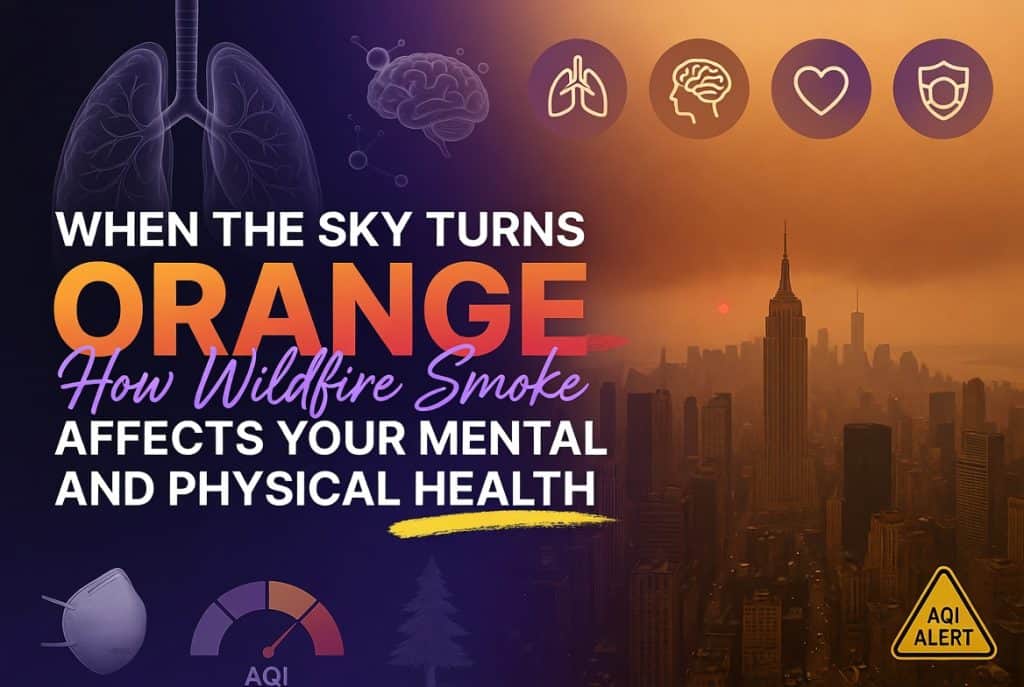
If you were in New York City during the summer of 2023, you likely remember the eerie sight of an orange, hazy sky hanging over Manhattan. The air smelled of campfire, visibility dropped to just a few blocks, and health alerts urged people to stay indoors. For many New Yorkers, it felt unsettling in a way that was hard to articulate. That discomfort was not just aesthetic or inconvenient. The wildfire smoke mental health connection is real, well-documented, and worth understanding, especially as smoke events become more frequent in the Northeast.
What Wildfire Smoke Actually Does to Your Body
Before exploring the emotional and psychological toll, it helps to understand what wildfire smoke physically does when you breathe it in. Unlike ordinary air pollution, wildfire smoke contains a complex mix of fine particulate matter, carbon monoxide, nitrogen oxides, and dozens of toxic compounds released when forests, brush, and structures burn. The tiniest particles, known as PM2.5, are small enough to bypass the body’s natural filters and travel deep into the lungs and bloodstream.
Short-term exposure can cause throat irritation, coughing, shortness of breath, and headaches. People with asthma, heart disease, or chronic respiratory conditions are especially vulnerable. But even healthy adults can feel symptoms after just a few hours of significant exposure. According to the National Institute of Mental Health, physical health and mental health are deeply interconnected, and when your body is under stress, your brain is too.
The Wildfire Smoke Mental Health Connection You Might Not Expect
Most people know smoke is bad for the lungs. Far fewer realize how significantly it can affect the mind. Research increasingly shows that air pollution exposure is linked to measurable changes in mood, cognition, and emotional regulation. A growing body of evidence connects PM2.5 exposure to increased rates of anxiety, depression, and even psychotic episodes in vulnerable individuals.
There are several reasons for this. Inflammation is one. Fine particles trigger an inflammatory response throughout the body, including in the brain. Neuroinflammation has been linked to depression and mood instability. Disrupted sleep is another pathway. Smoke, even at moderate levels, can interfere with breathing during sleep and reduce oxygen intake overnight, leading to poor rest that compounds irritability, anxiety, and difficulty concentrating.
Then there is the psychological weight of seeing and smelling disaster. Smoke is not abstract. It carries an unmistakable signal that something large and destructive is burning somewhere. For many New Yorkers, especially those with existing anxiety disorders or trauma histories, that signal activates a stress response that does not simply switch off when they go back indoors.
Eco-Anxiety and the Grief of Climate Change
Wildfire smoke events have introduced a relatively new category of emotional distress to mental health conversations: eco-anxiety. The American Psychological Association has described eco-anxiety as a chronic fear of environmental doom, a pervasive sense of helplessness in the face of climate change that can manifest as persistent worry, grief, anger, or numbness.
When New York City is blanketed in smoke from fires burning hundreds of miles away in Canada or the American West, it makes the climate crisis feel immediate and inescapable in a way that a news article never quite does. People who have worked hard to stay informed but compartmentalize their climate fears find that suddenly very difficult. The sky itself becomes a reminder. For some, this produces a sense of mourning, grief for a world that feels like it is changing faster than any of us can adapt to.
This kind of grief deserves to be taken seriously. It is not an overreaction. It is a reasonable emotional response to a genuinely alarming situation, and it can become clinically significant when it begins to interfere with sleep, relationships, work, or daily functioning.
Practical Steps to Protect Both Body and Mind During Smoke Events
During air quality alerts, there are concrete steps that can help. Staying indoors with windows closed and running an air purifier with a HEPA filter makes a meaningful difference in indoor PM2.5 levels. N95 masks offer substantial protection when going outside is unavoidable, far more so than surgical or cloth masks. Checking the EPA’s AirNow website for real-time air quality index readings helps you make informed decisions about outdoor activity.
For mental health specifically, limiting doom-scrolling during smoke events matters. Staying informed is reasonable. Spending hours reading wildfire coverage while trapped indoors can amplify anxiety without offering any additional benefit. Reaching out to friends or family, even virtually, helps counteract the isolating effect of being stuck inside. Movement, even gentle stretching or yoga indoors, supports mood regulation when outdoor exercise is off the table.
The Substance Abuse and Mental Health Services Administration also recommends grounding practices during periods of environmental stress, including focused breathing, sensory grounding, and connecting with community. These are not cure-alls, but they help maintain a sense of agency when external circumstances feel out of control.
When to Reach Out for Professional Support
Occasional unease during a smoke event is normal. But if you notice that air quality alerts trigger significant anxiety that lingers for days, if you find yourself unable to stop thinking about climate-related fears, if your sleep has become consistently disrupted, or if you feel a heaviness or sadness that does not seem to lift, those are signs worth paying attention to.
Psychiatric care is not reserved for crisis moments. Many people find it most valuable when they catch patterns of distress early, before they compound into something more difficult to manage. Medication, therapy, or a combination of both can help you build genuine resilience, not just the appearance of coping.
Future Psychiatry offers compassionate, evidence-based psychiatric care to adults navigating anxiety, depression, and the very real emotional weight of living through a time of significant change. If you have been struggling, even quietly, reaching out is a meaningful first step. You can schedule a consultation at futurepsychiatry.com/contact, or learn more about what to expect from care at futurepsychiatry.com.

Future Psychiatry is a concierge practice in New York City specializing in integrative psychiatry, anxiety treatment, and holistic mental health. Founded by Jafar Novruzov, PMHNP-BC, the clinic provides luxury, evidence-based psychiatric care designed for long-term wellness.