
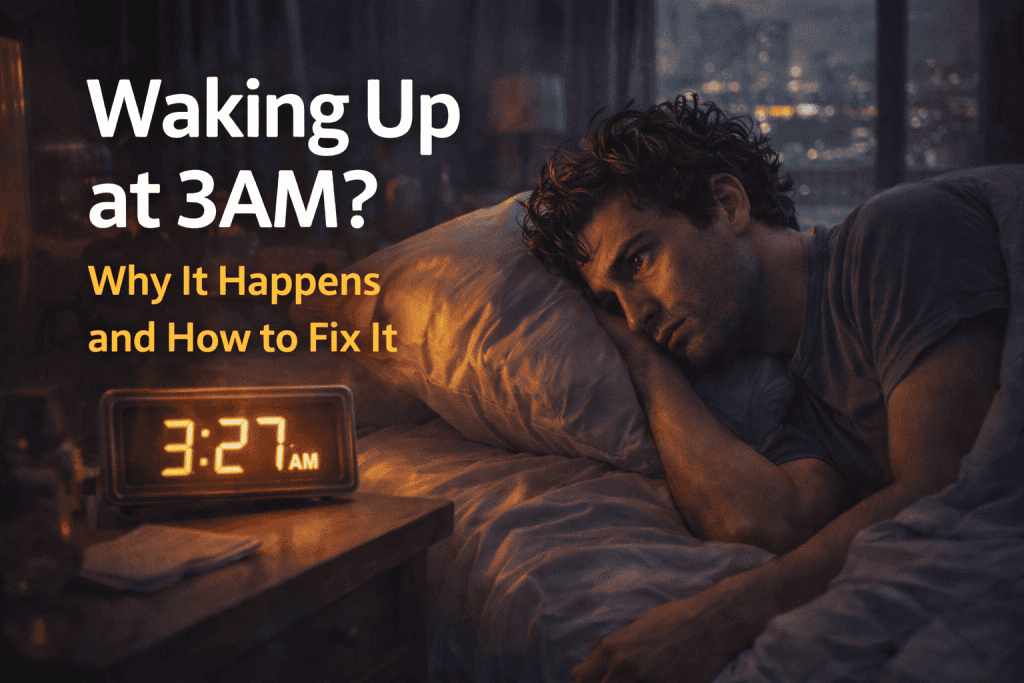
Waking up at 3AM and not being able to fall back asleep is one of the most common sleep complaints among high functioning adults.
You fall asleep without much difficulty. Then, a few hours later, your eyes open. Your body feels alert. Your mind turns on. Sleep does not return.
If this happens regularly, it is not random. It is often a signal from your nervous system and stress response.
What Is Early Morning Awakening
Early morning awakening is a form of insomnia where:
- You fall asleep normally
- You wake up too early, often between 3 and 5 in the morning
- You cannot return to sleep
It is commonly associated with:
- chronic stress
- anxiety
- depression
- circadian rhythm disruption
This pattern is also known as sleep maintenance insomnia.
Why You Wake Up at 3AM
The most common driver is a disruption in cortisol timing.
Cortisol is a hormone that helps regulate your sleep and wake cycle.
In a balanced system:
- cortisol stays low at night
- it gradually rises closer to morning
In a dysregulated system:
- cortisol rises too early
- the brain interprets this as a signal to wake up
This is why many people wake up suddenly and feel alert, even though they are still tired.
The Nervous System Connection
Sleep is not just about the brain. It is about the state of your nervous system.
When your system is under chronic stress:
the body remains partially activated
sleep becomes lighter and more fragmented
early awakening becomes more likely
This is especially common in individuals who are constantly thinking, planning, or carrying internal pressure.
Who Is Most Affected
This pattern is often seen in people who:
are high achieving or performance driven
experience ongoing mental load
have anxiety or ADHD traits
have gone through prolonged stress or burnout
Many appear stable externally but feel internally activated.
Other Causes of Waking Up Too Early
While stress is the most common cause, other factors may contribute:
blood sugar drops during the night
alcohol or late caffeine intake
irregular sleep schedule
excessive screen exposure before bed
underlying sleep disorders
How to Stop Waking Up at 3AM
Improving this pattern requires addressing the underlying physiology.
Regulate your evening environment
Reduce stimulation in the evening. Lower light exposure and give your brain a clear signal that the day is ending.
Support your nervous system
Simple practices such as slow breathing or light stretching can help shift your body out of a stress state.
Stabilize blood sugar
Avoid going to bed overly hungry. Balanced meals can prevent nighttime awakenings.
Address mental overactivity
If your mind becomes active at night, it often reflects unprocessed cognitive load during the day.
When Supplements May Help
Some individuals benefit from targeted support such as magnesium, glycine, or L theanine.
These can support relaxation, but they are not a complete solution without addressing the root cause.
When to Seek Help
If you consistently wake up early and it affects your energy, mood, or focus, it may indicate:
chronic stress dysregulation
mood related changes
circadian rhythm disruption
A More Precise Approach to Sleep
Waking up at 3AM is not just a sleep problem.
It is often a nervous system signal.
When you understand the physiology behind it, the solution becomes clearer and more targeted.
Work With Future Psychiatry
At Future Psychiatry, we work with busy professionals who are functioning externally but struggling with sleep disruption, burnout, anxiety, or cognitive fatigue.
- Our approach integrates:
- evidence based psychiatry
- sleep and circadian optimization
- nervous system regulation
- targeted supplementation when appropriate

Future Psychiatry is a concierge practice in New York City specializing in integrative psychiatry, anxiety treatment, and holistic mental health. Founded by Jafar Novruzov, PMHNP-BC, the clinic provides luxury, evidence-based psychiatric care designed for long-term wellness.