
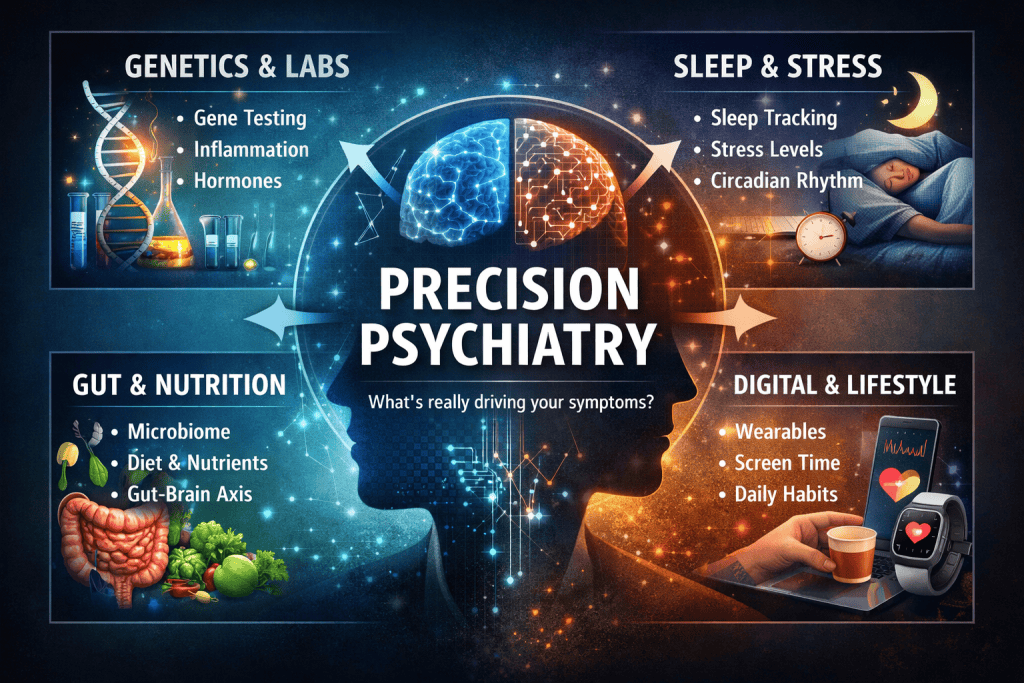
Precision psychiatry is becoming less theoretical and more practical. Instead of trial-and-error prescribing, the focus is shifting toward using data to guide decisions. That includes genetics, sleep patterns, inflammation, metabolic health, and even behavior patterns.
The goal is simple: match the right intervention to the right person faster.
Genetics is one part of it, but not the whole story.
Genetic testing is useful, especially for medication metabolism. Variants in enzymes like CYP2D6 or CYP2C19 can explain why some people are sensitive to medications or don’t respond at typical doses.
But genetics alone doesn’t predict outcomes. Most psychiatric conditions are polygenic and influenced heavily by environment, sleep, stress, and lifestyle. So genetics should guide decisions, not dictate them.
Biomarkers are becoming more relevant
There is growing evidence linking mental health symptoms to measurable biological markers.
Examples include:
- Inflammation markers like CRP and IL-6
- Vitamin deficiencies such as B12, folate, vitamin D
- Thyroid function
- Hormonal balance including cortisol and sex hormones
Low-grade inflammation is increasingly associated with depression and fatigue. In some cases, addressing inflammation changes clinical outcomes more than adjusting medications.
Sleep is one of the strongest predictors of psychiatric stability
Sleep architecture is often overlooked, but it is central to mood regulation.
Disruptions in deep sleep and REM sleep are linked to depression, anxiety, and cognitive issues. Even subtle issues like early morning awakenings or fragmented sleep can signal underlying dysregulation.
Wearables are now making this measurable. Instead of guessing, you can track sleep stages, heart rate variability, and recovery patterns. This allows for more targeted interventions like magnesium, glycine, circadian rhythm correction, or light exposure.
ADHD and focus are being approached differently
The current trend is moving beyond just stimulant prescribing.
There is more emphasis on:
- Dopamine regulation through lifestyle.
- Sleep optimization
- Nutrient support like omega-3s and magnesium
- Reducing overstimulation from constant digital input
For many high-functioning adults, the issue is not just ADHD. It is a combination of sleep debt, stress, and cognitive overload.
Gut-brain connection is not just theory anymore
There is increasing evidence linking gut health to mood and anxiety.
Changes in the microbiome can influence neurotransmitter production, inflammation, and even stress response. While this area is still developing, interventions like diet changes, probiotics, and reducing processed foods are showing consistent benefits.
What this means in practice
Precision psychiatry is not about replacing medication. It is about making smarter decisions.
In real-world practice, this looks like:
- More detailed intake focusing on sleep, nutrition, and stress
- Selective use of labs instead of routine overtesting
- Combining medication with targeted lifestyle interventions
- Tracking outcomes over time instead of making rapid changes
The field is moving toward combining multiple data points: genetics, labs, wearable data, and clinical history.
AI and predictive modeling will likely play a larger role, but even now, a more personalized and integrative approach already improves outcomes.
The biggest shift is mindset. Instead of asking “what medication treats this diagnosis,” the question becomes “what is driving this person’s symptoms.”
That is where precision psychiatry actually starts.

Future Psychiatry is a concierge practice in New York City specializing in integrative psychiatry, anxiety treatment, and holistic mental health. Founded by Jafar Novruzov, PMHNP-BC, the clinic provides luxury, evidence-based psychiatric care designed for long-term wellness.