
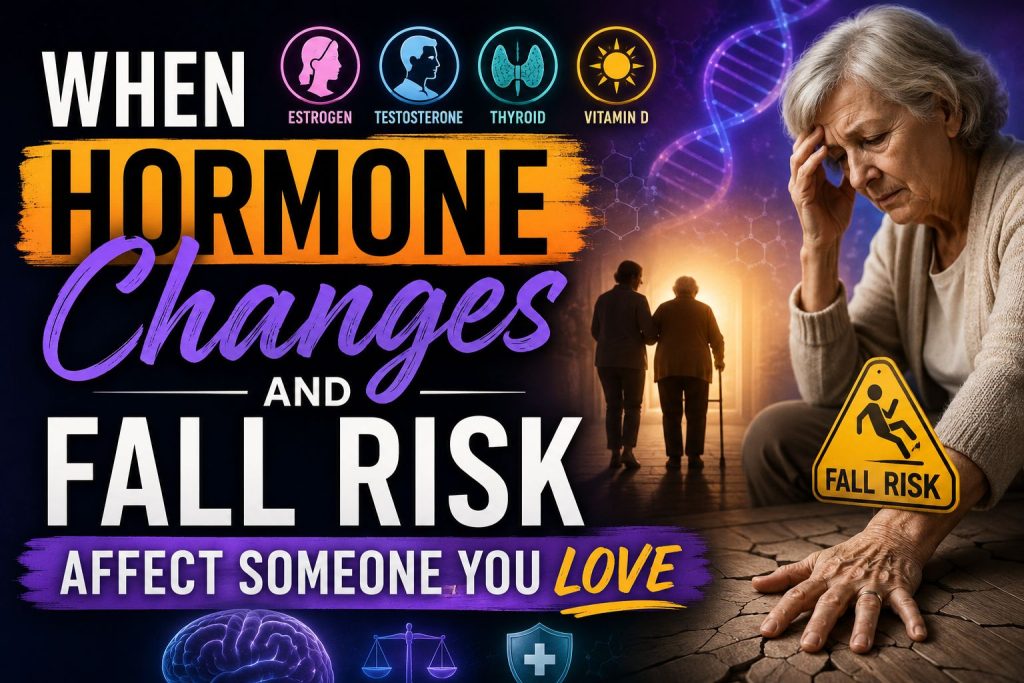
If you have noticed that an aging parent, partner, or patient seems less steady on their feet, more anxious than usual, or has landed in the hospital after a fall that seemed to come out of nowhere, hormone changes and fall risk may be part of the picture. The body’s hormone levels shift quietly with age, and those shifts can affect muscle strength, balance, mood, and memory all at once. Recognizing this connection early can help families and patients ask better questions and get ahead of problems before a crisis lands someone in the emergency room.
How Hormones Shift as We Age
Several hormones decline or become unstable with age, and each one plays a quiet role in keeping an older body steady. Estrogen levels drop sharply after menopause, which speeds up bone loss and raises the risk of fractures. A 2026 study presented at the American Academy of Orthopaedic Surgeons annual meeting followed more than 137,000 postmenopausal women and found that starting hormone therapy early reduced fracture risk by 13 percent, underscoring just how closely estrogen and bone strength are linked. Testosterone follows a similar pattern in men, with roughly 20 percent of men over 60, 30 percent over 70, and half of men over 80 living with levels low enough to be considered hypogonadism. Lower testosterone is tied to reduced muscle mass and strength, which makes a simple stumble far more likely to end in a fall, and it has also been linked to higher rates of depression in older men.
Hormones, Mood, and Memory
Thyroid hormone is another piece of this picture, since both an underactive and an overactive thyroid have been linked to memory trouble, slowed thinking, and depressed mood in older adults. Even thyroid levels that fall within a technically normal range can affect cognitive performance as people age, which is one reason a simple blood test is often worth requesting when mood or memory changes seem to come from nowhere. Vitamin D, which functions as a hormone in the body, tells a similar story. About half of older adults run low on vitamin D, partly because the skin produces roughly 13 percent less of it with each passing decade. Older adults who fall tend to have noticeably lower vitamin D levels than those who do not, and low vitamin D has also been associated with higher rates of depression in this age group.
How This Connection Leads to the Hospital
The Centers for Disease Control and Prevention reports that one in four older adults falls every year, and falls now account for roughly one million hospitalizations and three million emergency department visits annually among this age group. Hip fractures are especially serious, with falls responsible for the large majority of hip fracture hospital visits and deaths. Once weaker bones, reduced muscle, or slower reflexes are already in the picture, even a small misstep around the house can turn into a hospital stay, surgery, and a long recovery that reshapes daily life for an entire family.
The Mental Health Toll That Often Follows
A fall rarely affects the body alone. Research shows that fear of falling again is one of the strongest predictors of anxiety and depression in older adults, even more so than the fall itself. Among hospitalized patients who developed a strong fear of falling, nearly 38 percent went on to meet criteria for a depressive disorder, compared with only 4 percent of those without that fear. Close to half of older adults report living with some degree of fear of falling, and that worry can quietly shrink a person’s world, leading them to stay home, move less, and disengage from the people and activities that once brought them joy. Left unaddressed, this mix of physical decline and emotional withdrawal can become its own cycle, one that deserves just as much attention as the original fall.
Why This Calls for Looking at the Whole Person
Because hormone changes and fall risk touch the body, the mind, and daily functioning all together, treating any one piece in isolation rarely tells the whole story. An older patient who seems newly anxious, withdrawn, or forgetful may be experiencing the downstream effects of a hormone imbalance, the emotional aftermath of a fall, or both at once. The National Institute on Aging notes that hormone related changes are a normal part of aging but are still worth discussing with a provider, especially when new mood or memory symptoms appear. The National Institute of Mental Health similarly points out that depression and anxiety in older adults are often overlooked or mistaken for an ordinary part of aging, when in fact they respond well to proper evaluation and care.
Taking the Next Step With Future Psychiatry
If a fall, a hospital stay, or a shift in mood or memory has left you wondering what comes next for yourself or someone you love, you do not have to sort through it alone. Future Psychiatry offers thoughtful, whole person evaluations that consider how physical health, hormone changes, and mental health all interact in later life, and you can learn more about the full scope of care available at futurepsychiatry.com/services. Reaching out early, before a small concern becomes a crisis, often makes the biggest difference. Visit futurepsychiatry.com/contact to schedule a conversation and start finding steadier ground.
For anyone curious about their own hormone levels before symptoms become serious, Future Life Lab offers simple, single point saliva based hormone testing that can be done from home, with no blood draw or clinic visit required. Catching a shift in estrogen, testosterone, thyroid, or vitamin D early can be one practical, low effort step toward reducing fall risk and supporting steadier mood for years to come.
Future Psychiatry serves patients seeking compassionate, evidence based psychiatric care. Future Psychiatry is committed to making mental health treatment accessible, personalized, and truly effective.
#MentalHealth #Psychiatry #PsychiatricCare #GeriatricMentalHealth #FallPrevention #HormoneHealth #FuturePsychiatry

Future Psychiatry is a concierge practice in New York City specializing in integrative psychiatry, anxiety treatment, and holistic mental health. Founded by Jafar Novruzov, PMHNP-BC, the clinic provides luxury, evidence-based psychiatric care designed for long-term wellness.