
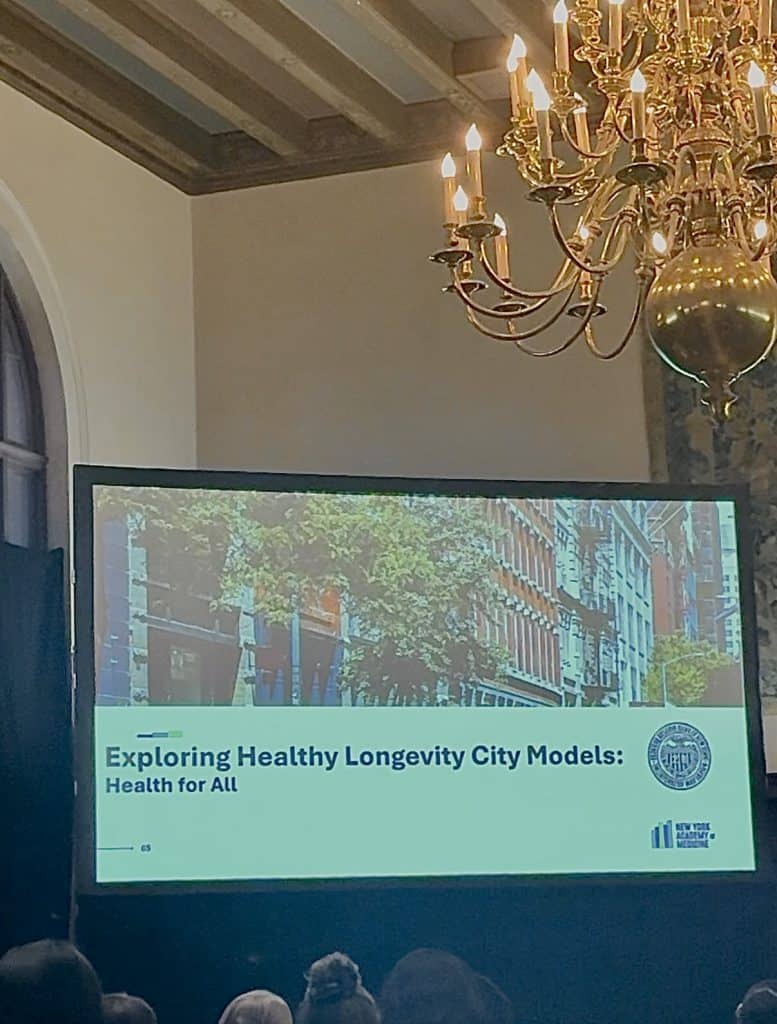
Mental health does not unfold in isolation—it develops over decades, shaped by environment, lifestyle, sleep, and social connection. As research on healthy longevity cities reveals how urban design can protect cognitive and emotional health across the lifespan, psychiatry is entering a new, prevention-focused era. Concierge psychiatry NYC sits at the intersection of these insights, translating longevity science, neuroscience, and sleep research into personalized, long-term mental health care designed for high-demand urban living.
As psychiatry enters a longevity-focused era, these city-level models offer powerful insights into how mental health can be protected long before clinical symptoms emerge.
Cities as Long-Term Mental Health Interventions
A growing body of evidence shows that mental health outcomes are strongly influenced by social and environmental determinants, often more than by medical treatment alone.
The World Health Organization has emphasized that urban design directly affects depression, anxiety, cognitive decline, and overall psychological well-being through factors such as housing stability, noise exposure, air quality, green space, and social cohesion.
World Health Organization – Urban Health:
https://www.who.int/teams/environment-climate-change-and-health/urban-health
In effect, cities act as chronic exposures—either supporting or undermining mental health across the lifespan.
Longevity Science Changes the Psychiatric Timeline
Traditional psychiatry often focuses on treating illness once it becomes disruptive. Longevity science shifts this framework toward trajectory-based care, asking how mental health evolves over decades.
Research from global longevity studies, including the Blue Zones, shows that sustained mental well-being is closely associated with:
- lifelong social integration
- daily physical activity embedded into routine life
- stable circadian rhythms and sleep timing
- low chronic stress exposure
Blue Zones Research Overview:
https://www.bluezones.com/research/
These findings suggest that mental health is not episodic—it is cumulative.
What This Means for the Future of Psychiatry
Healthy longevity city models highlight a necessary evolution in psychiatric care:
- from symptom-based treatment → risk identification and prevention
- from isolated clinical encounters → context-aware, longitudinal care
- from short visits → life-course mental health planning
Modern psychiatry must integrate:
- neuroscience and longevity research
- sleep and circadian health
- social connection and environmental stressors
- early cognitive and emotional resilience strategies
This approach defines the emerging field of longevity-informed psychiatry.
Concierge Psychiatry in New York City: Why Context Matters
In New York City, where high cognitive demands, chronic stress, and sleep disruption are common, longevity-informed psychiatry becomes especially relevant.
Concierge psychiatry allows for the depth, continuity, and preventive focus required to support long-term mental health in high-functioning adults living in complex urban environments. Rather than reacting to burnout, focus loss, or emotional instability after they become disabling, this model emphasizes early intervention and systems-level understanding.
This philosophy guides the work of Future Psychiatry, a concierge psychiatric practice in NYC integrating longevity science, neuroscience, sleep optimization, and individualized preventive care.
From Urban Design to Individual Mental Health Care
While cities influence population-level outcomes, mental health is experienced individually. The future of psychiatry lies in bridging these levels—translating insights from healthy longevity environments into personalized care.
Many adults seek psychiatric support not because they are failing, but because their focus, sleep quality, or emotional resilience is gradually slipping despite high performance. Longevity-informed psychiatry addresses these changes early, before they evolve into entrenched illness.
Healthy longevity cities remind us that mental health is not only about diagnosis.
It is about designing lives that protect the brain over time.
Looking Ahead
As societies age, psychiatry must expand beyond clinic walls.
The critical question is no longer only how do we treat mental illness?
It is:
How do we support mental health across decades of living?
Healthy longevity cities offer a blueprint. Psychiatry must now learn to apply it.
References
- World Health Organization. Urban health and well-being.
https://www.who.int/teams/environment-climate-change-and-health/urban-health - Blue Zones. Research on longevity and well-being.
https://www.bluezones.com/research/

Future Psychiatry is a concierge practice in New York City specializing in integrative psychiatry, anxiety treatment, and holistic mental health. Founded by Jafar Novruzov, PMHNP-BC, the clinic provides luxury, evidence-based psychiatric care designed for long-term wellness.